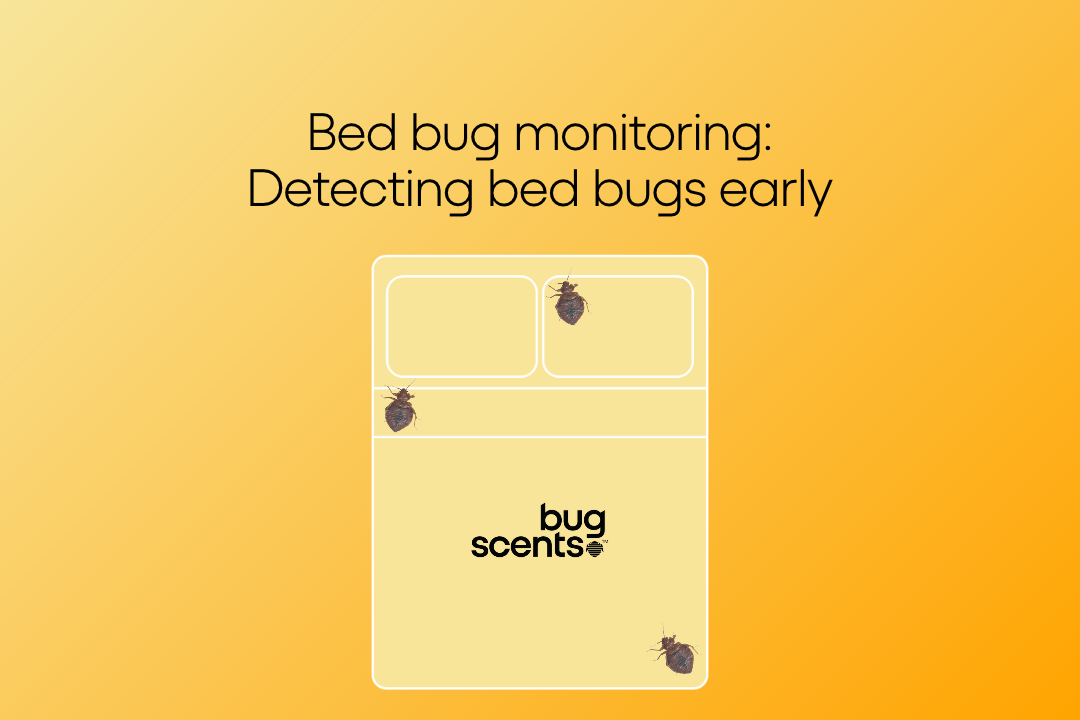


Bed bugs are about the size of an apple seed, they come out at night, and they hide into seams, cracks and crevices close to where people sleep. By the time most people notice bites or blood spots on the sheets, an infestation has often been building for weeks.
That's where bed bug monitors come in. A monitor is a device that attracts and catches bed bugs so you can confirm whether they're present, often long before you'd spot them with your own eyes. Below we explain how bed bug monitors work, the different types available, where to put them, how long to leave them and how to use them after treatment.
Why early detection matters
The earlier you find bed bugs, the easier, quicker and cheaper they are to deal with. A handful of bugs in one bed is a very different job from an infestation that has spread through a whole flat, or from room to room in a hotel or block of flats.
Bed bugs spread easily. They travel in luggage, clothing, second-hand furniture and bags, and in shared buildings they can move between rooms through walls, wiring and pipework. A small, undetected population can grow steadily, because each female can lay eggs throughout her life and the young (called nymphs) are tiny and hard to see.
Catching them early means:
- fewer bites and less disturbed sleep
- a smaller area to treat, often with less disruption
- lower costs for treatment and replacement furniture
- less risk of spreading them to friends, family, guests or neighbours
- for businesses, less risk of complaints, bad reviews and lost revenue
The signs of bed bugs, and why you might miss them
The classic signs of bed bugs include:
- small, itchy bites, often in lines or clusters on skin exposed while sleeping
- small rusty or dark spots on sheets, mattresses and pillowcases (blood or droppings)
- pale, papery shed skins left behind as nymphs grow
- tiny white eggs in seams and crevices
- live bugs in mattress seams, bed frames, headboards, skirting boards and furniture joints
- in heavier infestations, a musty, sweetish smell
The problem is that every one of these signs is easy to miss or misread. Not everyone reacts to bites, and those who do may mistake them for mosquito or flea bites. Droppings and skins are small and easy to overlook. A thorough visual inspection takes time, needs a torch and a trained eye, and can still miss a low-level infestation hiding deep in furniture.
This is the gap a monitor fills. Instead of you searching for the bugs, the monitor brings them to you.
What is a bed bug monitor?
A bed bug monitor (sometimes called a bed bug detector, detection device or trap) is a device that catches or records bed bugs so you can tell whether they're present and roughly how many there are. Monitors are used to confirm a suspected infestation, to check that a treatment has worked, and to keep watch for new arrivals.
There are three main types.
|
Type |
What it is |
How it works |
|
Passive monitors |
Sticky boards or harbourages placed where bed bugs hide or travel, with no attractant |
Cheap and simple, usually rely on bugs wandering in by chance, so can be slow or miss low numbers |
|
Interceptors |
Usually placed under bed or furniture legs that trap bugs climbing up or down |
Good at catching bugs moving to and from a bed but they rely on bugs crossing them |
|
Active monitors |
Use an attractant (such as a lure) to draw bugs in |
Actively pull bugs out of hiding, so they can detect faster and at lower numbers. They are active monitor, instead of waiting for bed bugs to find the device, they use the bugs' own chemical signals to draw them in. |
How scent-based bed bug monitors work
Bed bugs communicate using smell. When they find a good hiding place, they release a chemical signal called an aggregation pheromone, which tells other bed bugs that it's a safe place to gather. It's one of the reasons bed bugs cluster together in seams and crevices.
Scent-based monitors turn this behaviour against them. BugScents™ monitors use a patented lure based on the bed bug aggregation pheromone. Bed bugs roaming at night pick up the scent, follow it into the monitor and are caught on a glue board inside.
Because the lure actively draws bed bugs in, rather than waiting for them to wander past, scent-based monitoring can confirm bed bugs quickly. BugScents™ can detect bed bugs in as little as 72h and it catches both adults and nymphs, so it can show the presence of a young, growing population as well as an established one.
The monitors are slim and discreet, so they can sit under beds (including divans) and alongside furniture without drawing attention. They're also reusable: the lure and glue board can be replaced.
Where to place a bed bug monitor, and how long to leave it
Placement makes a big difference. Bed bugs want to feed on a sleeping person, so put monitors between where they're likely to hide and where people sleep.
- Put a monitor next to or under each bed, on the side closest to the pillow end.
- Add a monitor beside any other furniture people sit or lie on for long periods, such as sofas and armchairs.
- If you suspect particular items, place one next to each of them.
- Leave beds and furniture in normal use. Monitors work best in occupied rooms, where people's presence draws bed bugs out to feed.
- Check the glue board for bugs, shed skins or eggs at the end of the monitoring period.
For a quick check, leave BugScents™ Sentry Pro in place for at least 72-96 hours to give roaming bed bugs time to find the lure. For ongoing monitoring, Sentry Pro can stay in place for up to three months.
If you catch a bed bug, don't panic, but do act quickly. Contact a professional pest controller, and avoid moving furniture or bedding to other rooms, which can spread the problem.
Bed bug monitors for homes, travellers and professionals
Different people need monitors for different reasons, and BugScents™ makes two versions.
At home and on holiday: BugScents™ Sentry. Sentry is a portable, reusable monitor for people worried about bed bugs at home, and for travellers staying in hotels, hostels and holiday lets. Popping one by the bed when you arrive gives you an early warning before bed bugs have a chance to bite or hitch a ride home in your luggage.
For pest controllers: BugScents™ Sentry Pro. Sentry Pro is built for professional pest controllers. It lets them confirm a suspected infestation quickly instead of spending hours on manual searches, judge how widespread the problem is, and start treatment sooner.
For hotels, landlords and housing providers. Routine monitoring, usually set up and checked by a pest control partner, helps catch bed bugs between guests or tenants before they spread to neighbouring rooms. For a business, a single monitor is far cheaper than a closed room, a refund or a bad review.
Monitoring after treatment
Bed bug eggs can survive some treatments and hatch afterwards, and a few surviving bugs can rebuild an infestation. Monitoring afterwards shows whether the treatment has worked.
Pest controllers use monitors in two stages:
- Before treatment, to confirm bed bugs are present and see how far they've spread.
- After treatment, to confirm the bugs have gone.
An empty monitor after treatment gives residents, guests and property managers real evidence, not just reassurance, that the problem has been dealt with.
Frequently asked questions
Do bed bug monitors actually work? Yes, especially active monitors that use an attractant. They won't get rid of an infestation on their own, but they're one of the most reliable ways to find out whether bed bugs are present, often at levels too low to spot by eye.
Can a bed bug monitor get rid of bed bugs? No. Monitors are for detection, not control. If you find bed bugs, contact a professional pest controller for treatment, then use monitors to confirm it has worked.
How quickly will a monitor detect bed bugs? It depends on the type and how many bugs there are. BugScents™ can detect bed bugs in as little as 72 hours. We recommend leaving it for up to 96 hours for a reliable check.
Are bed bug monitors safe around children and pets? BugScents™ monitors can be used around children and pets when used as directed.
Do I need a monitor if I can't see any bed bugs? If you've had unexplained bites, are moving into a new home, have bought second-hand furniture or have just come back from a trip, a monitor is a simple way to check without a full inspection.
Where can I buy a bed bug monitor in the UK? See our shop page for BugScents™ Sentry or contact us if you are a distributor, pest controller, hotel, or professional.
Catch bed bugs early
Bed bugs are hard to find, and harder still to get rid of once they've spread. A good monitor won't replace professional treatment, but it gives you the one thing that makes everything else easier: early, clear evidence of whether bed bugs are there.
BugScents™ monitors use the science of bed bug scent to draw the bugs out of hiding, so you can act before a few bugs become an infestation.